
Florida Dashcam Evidence Law in 2026: A Complete Guide from The Dash Cam Lawyer®
By Shannon J. Sagan, Esq. | Florida Bar #10793 | Palm Beach County Personal Injury Attorney
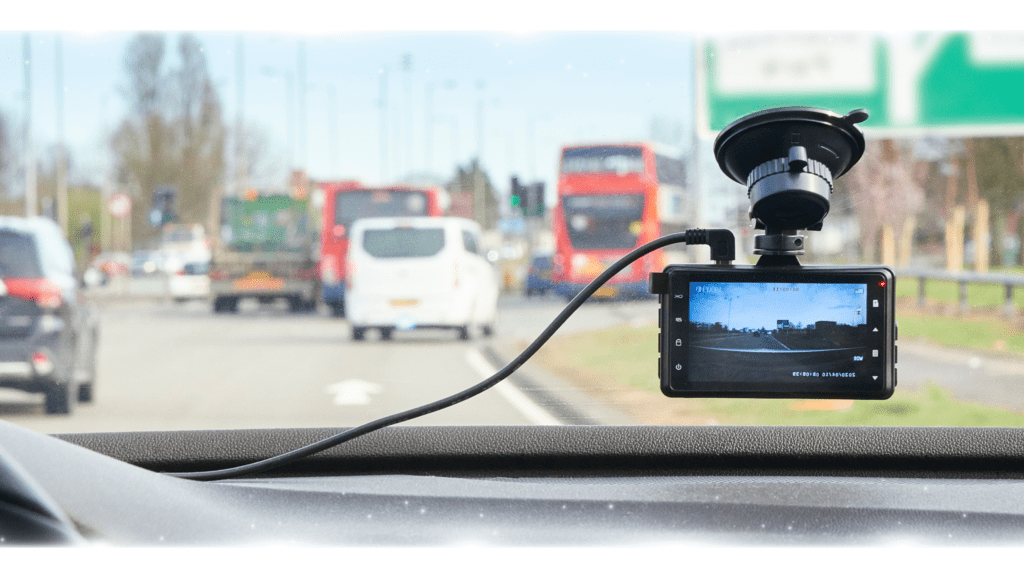
| Quick Answer (TL;DR): In Florida, dashcam video footage is generally admissible as evidence in court if it is relevant, authentic, and legally obtained. Audio recordings of dashcam video are treated more strictly under Chapter 934 of Florida Statutes and may require all parties’ consent. Following the 2023 passage of HB 837, which moved Florida to modified comparative negligence, dashcam evidence has become more valuable than ever. Being found more than 50% at fault now means recovering nothing. This guide explains what Florida drivers and accident victims need to know in 2026. |
Why Dashcam Evidence Matters More in 2026
Every year, Palm Beach County and Florida as a whole record tens of thousands of motor vehicle crashes. In the immediate chaos following a collision, the people involved often disagree about what happened. Witness statements conflict. Police reports rely on what officers can piece together after the fact. Insurance adjusters dig for any opening to reduce a payout.
That is the gap dashcam footage fills. A clear, time-stamped video of the moments before, during, and after an accident can resolve disputes that would otherwise stretch into months of litigation. As The Dash Cam Lawyer®, I have built my practice around helping Floridians use this evidence to their advantage and avoid the traps that get dashcam footage thrown out before it ever reaches a jury.
This guide walks through what every Florida driver should know about dashcam law in 2026, including the laws that govern recording, the rules that determine when footage is admissible in court, the impact of Florida’s 2023 tort reform on the value of video evidence, and the practical steps to take after an accident to preserve footage that could mean the difference between a full recovery and walking away with nothing.
Is Dashcam Footage Legal in Florida?
Yes. Florida law permits drivers to operate a dashboard-mounted camera while driving on public roadways. There is no statute that prohibits the use of a dashcam in a private vehicle in Florida.
That said, three legal limits apply:
- Mounting location: Florida law restricts how objects may be mounted on a vehicle’s windshield. Dashcams must be positioned so they do not obstruct the driver’s view of the roadway. Many drivers mount the device behind the rearview mirror to comply, which is what I do in my personal vehicles.
- Recording in public spaces: Dashcams typically capture video of public streets, intersections, and other publicly accessible areas. There is no general expectation of privacy in such places, so video recording is permitted.
- Audio recording: This is where Florida law becomes more complicated. See the dedicated section below on Florida’s two-party consent rule under Chapter 934.
In short, the act of recording video while driving is legal. The question of whether that recording can later be used as evidence in court is a separate analysis governed by the Florida Evidence Code.
When Is Dashcam Footage Admissible in Florida Court?
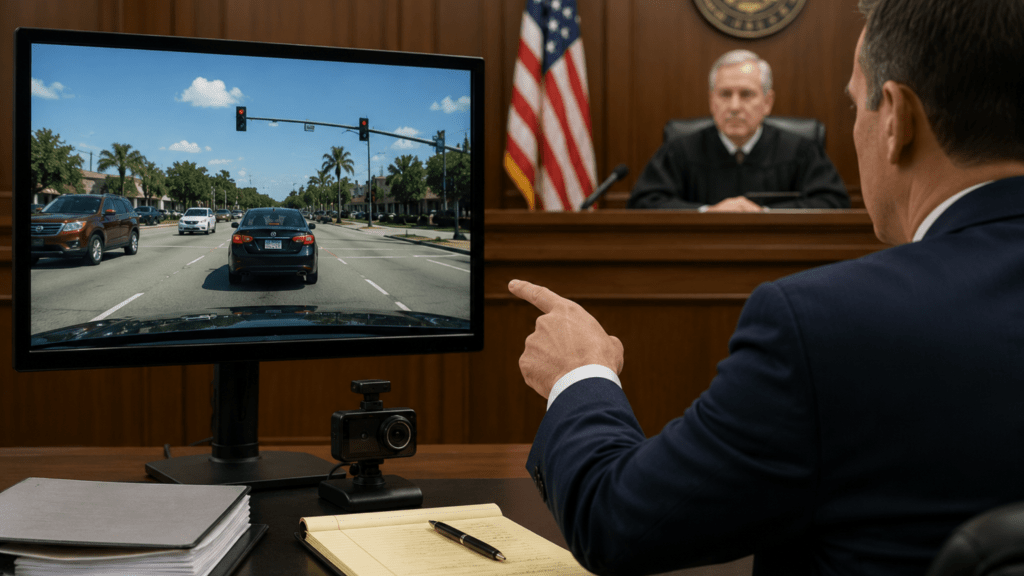
Florida courts generally treat dashcam recordings as photographic evidence under the Florida Evidence Code. To be admitted, the footage must clear three hurdles:
1. Relevance
Under Florida Statute Section 90.401, evidence must have a tendency to prove or disprove a material fact. Dashcam footage is almost always relevant when it captures the moments immediately before, during, or after a crash. For example, by showing the position of the vehicles, the operation of traffic signals, the conduct of drivers, road conditions, or the physical impact of a collision.
2. Authenticity
The footage must be what it claims to be. This typically means the recording is time-stamped, has not been altered, and can be linked to the device that produced it. Authentication can be established through the testimony of the person who installed and operated the dashcam, by metadata embedded in the original file, and in some cases by a forensic video analyst. Editing the footage, even to clip out portions you think are irrelevant, can compromise authentication and give opposing counsel grounds to challenge admissibility.
3. Legal Origin
The recording must have been obtained in a manner consistent with Florida law. Video captured from a dashcam mounted in your own vehicle, recording public roadways from your perspective, almost always satisfies this requirement. Problems arise when audio is involved or when the footage was obtained from a vehicle the operator did not have authority over.
If a dashcam recording satisfies all three requirements, it can be a powerful tool and often more persuasive to a jury than any witness account. Video does not forget, contradict itself, or get rattled on cross-examination.
The Audio Recording Trap: Florida’s Two-Party Consent Law
This is where many well-intentioned dashcam owners create problems for themselves. Florida is what is known as a two-party consent state under Chapter 934 of the Florida Statutes. Under Section 934.06, an oral communication recorded in violation of the chapter is generally inadmissible in any court proceeding.
In practical terms, that means audio captured inside the vehicle such as conversations between you and a passenger, or words exchanged with another driver after a crash, may be inadmissible if the other party did not know they were being recorded and did not have a reasonable expectation of privacy in the communication.
Two important nuances:
- Public roadway video remains admissible. The audio limitation does not invalidate the video portion of a recording.
- Public conversations may not be protected. If a conversation occurs in a context where there is no reasonable expectation of privacy, for example, two drivers shouting at each other on the side of a busy road, the analysis can shift. This is highly fact-specific.
| Practical tip: I myself turn the audio off on my personal dashcams and recommend the same to any Florida drivers, to eliminate the Chapter 934 risk altogether. If your dashcam currently records audio, consider whether you actually need it for your purposes. |
How HB 837 Made Dashcam Footage Even More Valuable
On March 24, 2023, Governor Ron DeSantis signed House Bill 837, which fundamentally changed how fault is allocated in Florida personal injury cases. The change is codified in Florida Statute Section 768.81, and it applies to every negligence action filed on or after that date.
From Pure to Modified Comparative Negligence
Before HB 837, Florida operated under pure comparative negligence. Under that system, an injured plaintiff could recover damages even if they were 80% or 90% at fault, with the recovery reduced by their percentage of fault.
After HB 837, Florida moved to modified comparative negligence with a 50% bar. The new rule is straightforward but harsh:
- If you are 50% or less at fault, you can still recover damages, reduced by your percentage of fault.
- If you are more than 50% at fault, you recover nothing.
Why This Makes Dashcam Footage Critical
Under the old system, getting blamed for 60% of the accident was painful, but you still walked away with 40% of your damages. This is a big deal if you had tens of thousands of dollars in medical bills to pay for. At least some of them could get paid for. Under the new system however, the same finding wipes out your case entirely.
Insurance adjusters know this. Defense attorneys know this. Their playbook now is to push as much fault as possible onto the injured plaintiff, hoping to get a fact finder over the 50% threshold and eliminate the claim altogether.
Clear, unambiguous dashcam footage of the other driver’s fault is the single best defense against this strategy. A jury that sees a video of the defendant blowing through a red light or rear-ending you at speed has very little room to apportion 51% of the fault to you.
| Note: Florida Statute Section 768.81(6) preserves the older pure comparative negligence standard for medical malpractice cases under Chapter 766. The 50% bar discussed here applies to most other negligence cases, including motor vehicle accidents. |
New 2025–2026 Rules: AI-Enhanced Footage and Disclosure
As artificial intelligence tools have become widely available, Florida courts have begun adopting rules requiring disclosure when AI has been introduced as evidence. Several Florida judicial circuits, including the 11th and 17th, have adopted local rules in the 2025–2026 timeframe requiring counsel to certify whether AI tools touched any video evidence offered at trial.
The practical implication is simple: if you or your attorney use AI software to clean up, sharpen, or stabilize dashcam footage before submitting it as evidence, that fact must be disclosed. Failing to disclose AI involvement can result in evidence being excluded, or worse, sanctions against the attorney.
This is one of many reasons why even routine-looking dashcam footage should be reviewed by an attorney familiar with current Florida evidence rules before it is shared with insurance companies, opposing counsel, or law enforcement.
How to Preserve Dashcam Footage After an Accident
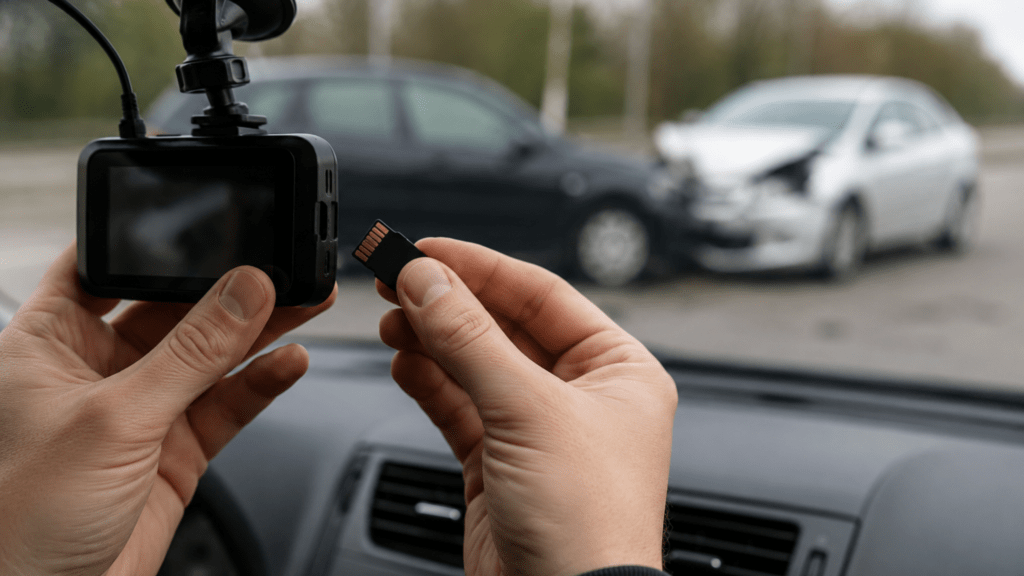
Most consumer dashcams operate in continuous loop mode, overwriting older footage to make space for new recordings. Without active steps to preserve the video of an accident, evidence that could have won your case may be erased within hours.
Take these steps as soon as it is safe to do so after a crash:
- Power off the dashcam. This stops the loop recording and prevents overwriting of the relevant footage.
- Remove the SD card or memory module. Store it in a safe place separate from the vehicle, especially if the vehicle is being towed.
- Make a backup copy on a separate device. Copy the original file to a computer or cloud storage. Do not edit, trim, or convert the original. Preserve it in its native format.
- Document the chain of custody. Write down the date and time you removed the SD card, who has had access to it, and where it has been stored. This protects authenticity later.
- Contact a personal injury attorney before sharing the footage. Insurance companies will ask for it. Sometimes that is fine. Sometimes it is not. An attorney’s review takes minutes and can prevent expensive mistakes.
Common Mistakes That Get Dashcam Evidence Thrown Out
Even strong footage can be ruined by avoidable mistakes. Watch for:
- Editing the original. Cropping, trimming, or color-correcting footage before authentication can give the other side grounds to challenge admissibility.
- Sharing the footage on social media. Public posts make the footage more widely accessible than necessary, can taint witness recollections, and may be used against you in unexpected ways.
- Allowing the footage to be overwritten. If you keep the dashcam running after an incident, the loop may erase the accident before you preserve it.
- Letting the insurance company keep the original. Always keep at minimum the original file in your own custody. Provide copies, not originals.
- Using AI enhancement without disclosure. Under newer Florida court rules, undisclosed AI processing can disqualify the footage.
- Recording audio without consent. As covered above, audio captured in violation of Chapter 934 may be inadmissible and may even create separate legal issues for the recorder.
Frequently Asked Questions: Florida Dashcam Evidence
The questions below cover the issues clients most commonly ask about Florida dashcam evidence. They are general information only and do not create an attorney-client relationship.
| Q: Is dashcam footage legal in Florida? | A: Yes. Florida law permits dashcam recording of video on public roadways. The device cannot block the driver’s view if mounted to the windshield. Audio recording is treated separately under Chapter 934 and generally requires two-party consent. |
| Q: Is dashcam footage admissible in Florida court? | A: Generally yes, if the footage is relevant to the case, authentic and unaltered, and was legally obtained. Courts treat dashcam recordings as photographic evidence under the Florida Evidence Code. |
| Q: Can a dashcam audio recording be used in court? | A: No, if the audio captured a private conversation without all parties’ consent. Florida Statute Section 934.06 may render such audio inadmissible. Attorneys like myself advise muting audio or recording only video to avoid this risk. |
| Q: Does HB 837 (Florida’s 2023 tort reform) change how dashcam footage matters? | A: Yes, it makes dashcam evidence more important than ever. Under modified comparative negligence (Florida Statute Section 768.81), a plaintiff who is more than 50% at fault recovers nothing. Clear video evidence of the other driver’s fault is critical to staying below that threshold. |
| Q: Do I need a dashcam to file a personal injury claim in Florida? | A: No. Dashcam footage is helpful but not required. Many Florida personal injury claims are won without it using witness statements, police reports, vehicle damage analysis, and accident reconstruction. Dashcam footage simply makes proving fault faster and more decisive. |
| Q: How quickly should I preserve dashcam footage after an accident? | A: Immediately. Most consumer dashcams overwrite older footage in a continuous loop. Power off the device or remove the SD card as soon as possible after a crash, then make a backup copy and contact an attorney before sharing the footage with anyone. |
| Q: Should I show my dashcam footage to the insurance company? | A: Speak with a personal injury attorney first. Insurance adjusters are trained to use any statement or evidence to reduce your recovery. An attorney can review the footage, identify what helps your case, and decide what to share and when. |
| Q: But aren’t there cameras on major intersections and highways in Palm Beach County? | A: Yes there are, but there is no guarantee you can get immediate access to them, and most of them currently are used for monitoring traffic patterns. Even if you are fortunate enough to get one of those videos, I have personally handled a case where they did not record the entire incident and a client was wrongfully accused of causing the accident, until I provided the actual dashcam footage. |
| Q: What happens if my dashcam footage shows I was partially at fault? | A: Under Florida’s modified comparative negligence rule, you can still recover damages if you are 50% or less at fault, but your recovery is reduced by your percentage of fault. If the footage shows you were more than 50% at fault, you may recover nothing. An attorney should review any footage that may not clearly favor you before it is shared. |
Get a Free Case Evaluation from The Dash Cam Lawyer®
If you have been injured in a Palm Beach County car accident, with or without dashcam footage, you deserve to understand your rights under Florida’s current laws. Shannon J. Sagan has built his Palm Beach County personal injury practice around helping accident victims use dash camera video evidence to maximize recoveries and avoid the traps Florida’s modified comparative negligence law creates for injured plaintiffs.
Recently Mr. Sagan was successful in having an investigating police officer reverse his decision of putting the blame on and giving tickets to Mr. Sagan’s client who was wrongfully accused of causing the accident. Once the officer was given the full dashcam footage of Mr. Sagan’s client, the officer’s decision was reversed, and fault was put on the other driver, and he was given a ticket for the accident and for lying.
Initial consultations on all injury matters are free. You pay no fees or costs unless we make a recovery on your behalf.
Call (561) 561-3274 today to speak with The Dash Cam Lawyer®