
Dashcams in Personal Injury Litigation: More Evidence, More Risk to Manage
Dashcam adoption has crossed from novelty into norm. More than one in five American drivers now run a forward-facing camera, and the footage increasingly shows up in personal injury and property damage litigation. For plaintiffs’ and defense counsel alike, that shift is a double edged sword: the same recording that resolves a disputed liability case in seconds can also fix a client to an unhelpful set of facts before discovery even begins.
A few observations from handling these cases:
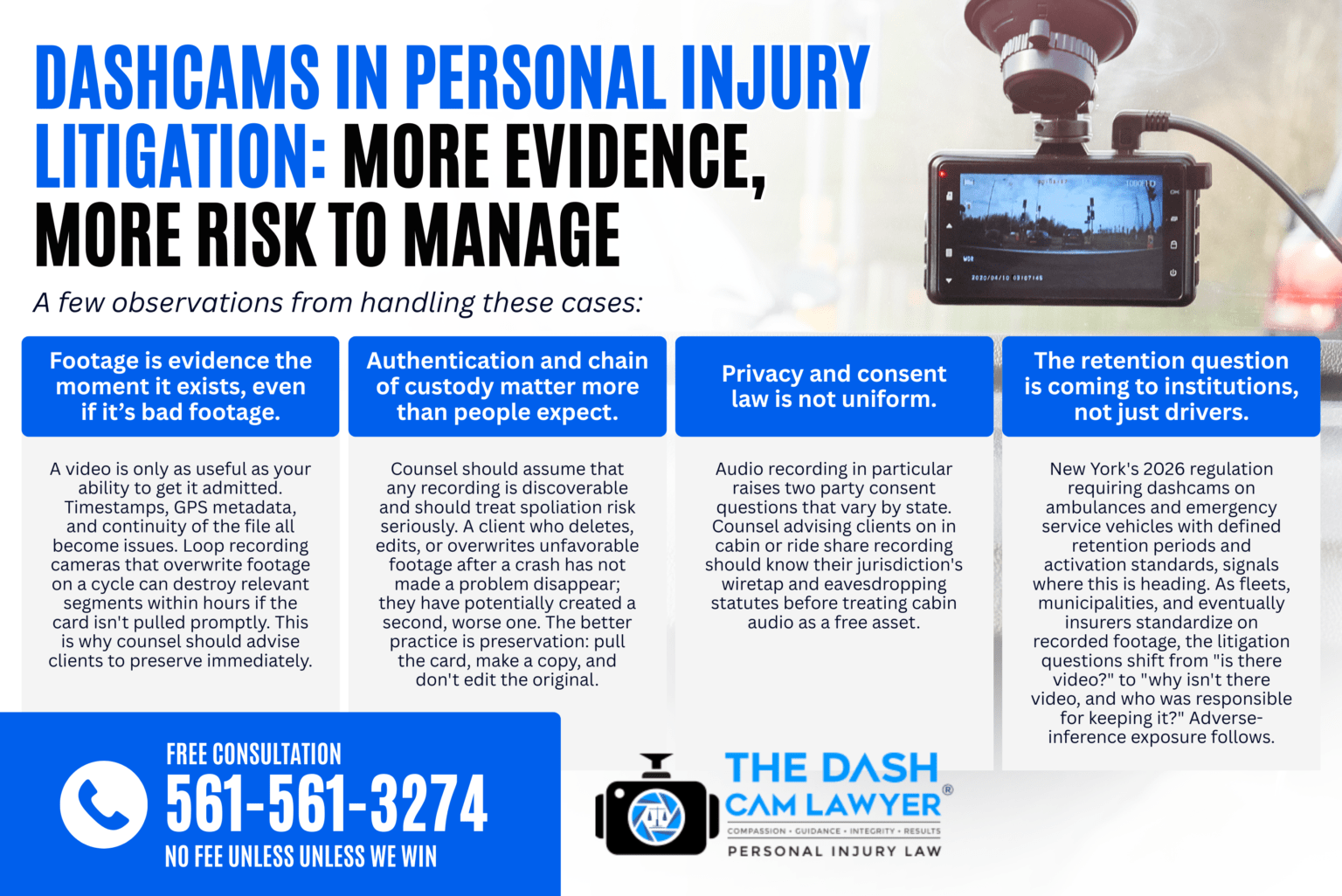
1. Footage is evidence the moment it exists, even if it’s bad footage. Counsel should assume that any recording is discoverable and should treat spoliation risk seriously. A client who deletes, edits, or overwrites unfavorable footage after a crash has not made a problem disappear; they have potentially created a second, worse one. The better practice is preservation: pull the card, make a copy, and don’t edit the original.
2. Authentication and chain of custody matter more than people expect. A video is only as useful as your ability to get it admitted. Timestamps, GPS metadata, and continuity of the file all become issues. Loop recording cameras that overwrite footage on a cycle can destroy relevant segments within hours if the card isn’t pulled promptly. This is why counsel should advise clients to preserve immediately.
3. Privacy and consent law is not uniform. Audio recording in particular raises two party consent questions that vary by state. Counsel advising clients on in cabin or ride share recording should know their jurisdiction’s wiretap and eavesdropping statutes before treating cabin audio as a free asset.
4. The retention question is coming to institutions, not just drivers. New York’s 2026 regulation requiring dashcams on ambulances and emergency service vehicles with defined retention periods and activation standards, signals where this is heading. As fleets, municipalities, and eventually insurers standardize on recorded footage, the litigation questions shift from “is there video?” to “why isn’t there video, and who was responsible for keeping it?” Adverse-inference exposure follows.
For litigators, the takeaway is not that dashcams are good or bad for a case. It is that footage is now a category of evidence that must be run down early, preserved carefully, and authenticated deliberately, on both sides of the “v.”
Shannon J. Sagan is a Florida personal injury attorney whose practice centers on dashcam and video evidence in accident claims.

Looking for an accident Lawyer near you in Palm Beach County? Find Out What Your Case Is Worth - Free Consultation
Call us or complete the form below.
We'll keep your information confidential.
Palm Springs Office
Belle Glade Office
By appointment only