
How Dash Cam Footage Wins Injury Cases in Florida
Every car accident case starts with the same fight, whose story does the insurance company believe? I decided years ago to stop playing that game. I'm Shannon Sagan, The Dash Cam Lawyer®. I trademarked the name, I give away dash cams, and I built my practice around one idea, the camera doesn't flinch, doesn't forget, and doesn't change its story. If you have footage of your crash, or you want to understand why you should be recording every mile, this page is for you.
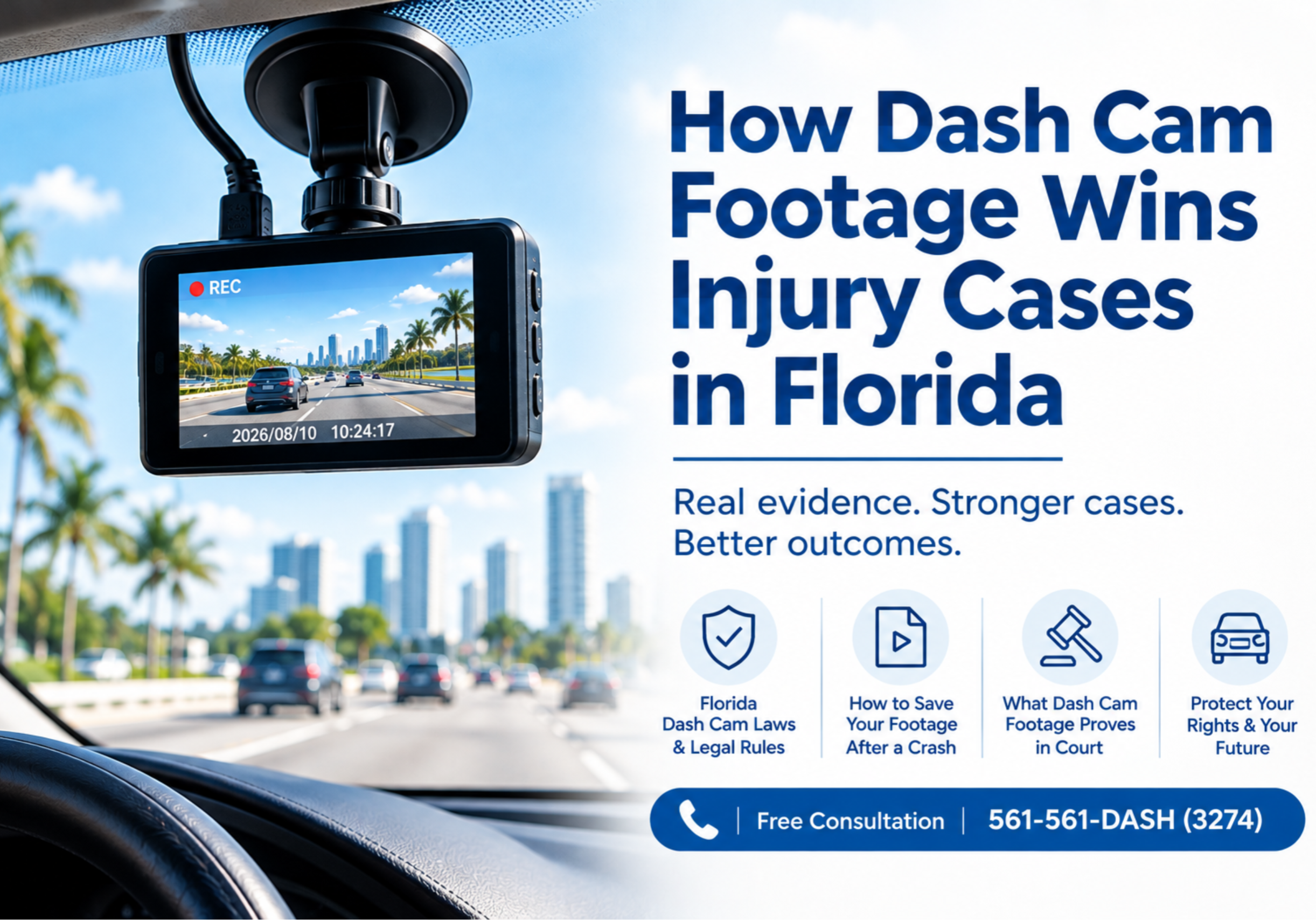
After seeing too many conflicting he said she said stories, people lying about how the accident happened and that they had the green light when in fact they didn’t, I decided enough was enough and started this campaign of getting as many dash cams in people’s cars as possible. It’s definitely helped with my client’s cases when they have done nothing wrong and were originally blamed for the accident, and nothing is better than hearing an insurance adjuster telling me my client was at fault, and all I do is just email them the dash cam footage showing how wrong they and their insured truly are.
Why Video Beats Testimony Every Time
Insurance adjusters are trained to find doubt. No witnesses? Doubt. Conflicting statements? Doubt. Doubt means delay, and delay means lowball offers. Footage kills doubt. It shows the light, the lane, the speed, the impact, and the seconds before it.
Are Dash Cams Legal in Florida? Yes, With Two Rules.
Rule one: don't block your view. Florida law (Statute 316.2004) prohibits anything on the windshield that obstructs the driver's clear view. Mount your camera behind the rearview mirror or on the dash. That keeps you legal and keeps the footage usable.
Rule two: watch the audio. Florida is an all-party consent state for recording private conversations (Statute 934.03). Video of the road is fair game. Recording audio of passengers inside your car without their knowledge is where drivers get in trouble. My advice: tell your passengers the cabin mic is on, or turn it off. The video is what wins cases anyway.
Is Dash Cam Footage Admissible in Florida Courts?
Yes. Legally recorded dash cam video is admissible in Florida injury cases when it's properly authenticated, meaning we can show what camera took it, when, and that it hasn't been altered. This is why what you do in the first few hours matters so much. Footage that gets overwritten, clipped carelessly, or passed around loses power. Footage that's preserved correctly is the closest thing to a time machine the law allows.
Footage and Florida's No-Fault System
Florida is a no-fault state. Your own Personal Injury Protection (PIP) coverage pays first, up to $10,000, no matter who caused the crash. The real money in a serious injury case comes from stepping outside that system and proving the other driver was at fault. That is exactly where video earns its keep.
It matters even more under Florida's modified comparative negligence rule. Since the 2023 tort reform, if a jury finds you more than 50 percent at fault, you recover nothing. Zero. Insurance companies know this, so they work hard to pin fault percentages on you. Footage is how I push back. Hard to argue the injured driver was speeding when the video shows the speed.
And the clock is short now. You only have two years from the crash to file a negligence lawsuit in Florida. Evidence disappears much faster than that. Cameras overwrite. Businesses delete. Witnesses move. The footage window is measured in days, not years.
How to Save Your Dash Cam Footage After a Crash
Do this before anything else:
Stop the recording loop. Most dash cams overwrite old clips automatically. Pull the SD card, turn the camera power off, or lock the clip in the app.
Back it up twice. Original file to your phone, a copy to the cloud or email. Keep the original file untouched, no editing, no trimming.
Note the details. Camera model, mounting position, date and time settings. This is authentication gold later.
Don't post it. Not to Facebook, not to a group chat. Once footage is public, the defense gets to spin it before I do.
Then call me. Send nothing to any insurance company until we've reviewed it together.
No Dash Cam? There's Still Video. I Go Get It.
Most of my cases don't start with my client's own footage. They start with everyone else's. Business surveillance. Doorbell cams. Other drivers' dash cams. Rideshare and truck fleet cameras. If that video exists, it can get deleted on a schedule, sometimes in days. If we know it may be there, my team will send preservation letters immediately so the footage gets locked down before it vanishes. This is the core of my practice, not a side skill.
I’ve had received door cam footage of a rear end accident in someone’s front yard. I’ve obtained footage from a business that caught a tbone crash involving my client. I’ve even had tesla drivers who’s cars caught the accident, offer it to my clients who were hit by an at fault driver.
Why I Give Away Dash Cams
I hand out dash cams because I've seen what happens to honest people who don't have one. Their word against a liar's, and the liar has an insurance company behind him. A camera costs less than a dinner out and it can be worth six figures in a disputed claim. Driving Without a Dash Cam? That's Crazy!.®
Frequently Asked Questions
Is dash cam footage admissible in a Florida car accident case?
Yes. Legally recorded dash cam video is admissible in Florida courts when properly authenticated. The video must come from a legally mounted camera, and audio of private conversations requires all-party consent under Florida Statute 934.03.
Are dash cams legal in Florida?
Yes. Dash cams are legal in Florida as long as they don't obstruct the driver's view of the road (Florida Statute 316.2004). Mounting on the dashboard or behind the rearview mirror is the safe play.
Can dash cam footage be used against me?
It can. Footage is neutral, it shows what happened, including your own driving. In practice, careful drivers benefit far more often than they're hurt, and under Florida's comparative fault rule, video that pins down percentages usually protects the driver who wasn't the problem.
How long does other camera footage last after a crash?
Often just hours. Many business surveillance systems overwrite in 30 days or less, some in 72 hours. Traffic and rideshare data can also be purged quickly. That's why I send preservation demands immediately, not after the medical treatment settles down.
Does a dash cam lower my insurance in Florida?
Florida insurers generally don't offer a formal dash cam discount yet. The real financial value is in claims: footage prevents fraudulent claims against you and proves fault when you're hit. That's worth more than a discount.
What should I do with my footage right now?
Lock the clip so it can't be overwritten, back it up twice, don't edit it, don't post it, and don't send it to any insurer. Then call me at 561-561-DASH (3274) and we'll review it together for free.
The Camera Did Its Job. Now Let Me Do Mine.
If you have footage of your crash, you're already ahead of 90 percent of injury victims. Don't waste that advantage on a do-it-yourself insurance claim. Call The Dash Cam Lawyer® at 561-561-DASH (3274). Free consultation, free footage review, no fee unless I win. Offices in Palm Springs and Belle Glade, serving West Palm Beach and all of Palm Beach County.
Looking for an accident Lawyer near you in Palm Beach County? Find Out What Your Case Is Worth - Free Consultation
Call us or complete the form below.
We'll keep your information confidential.