
Ambulance and Medical Transport Accident Lawyer in Palm Beach County
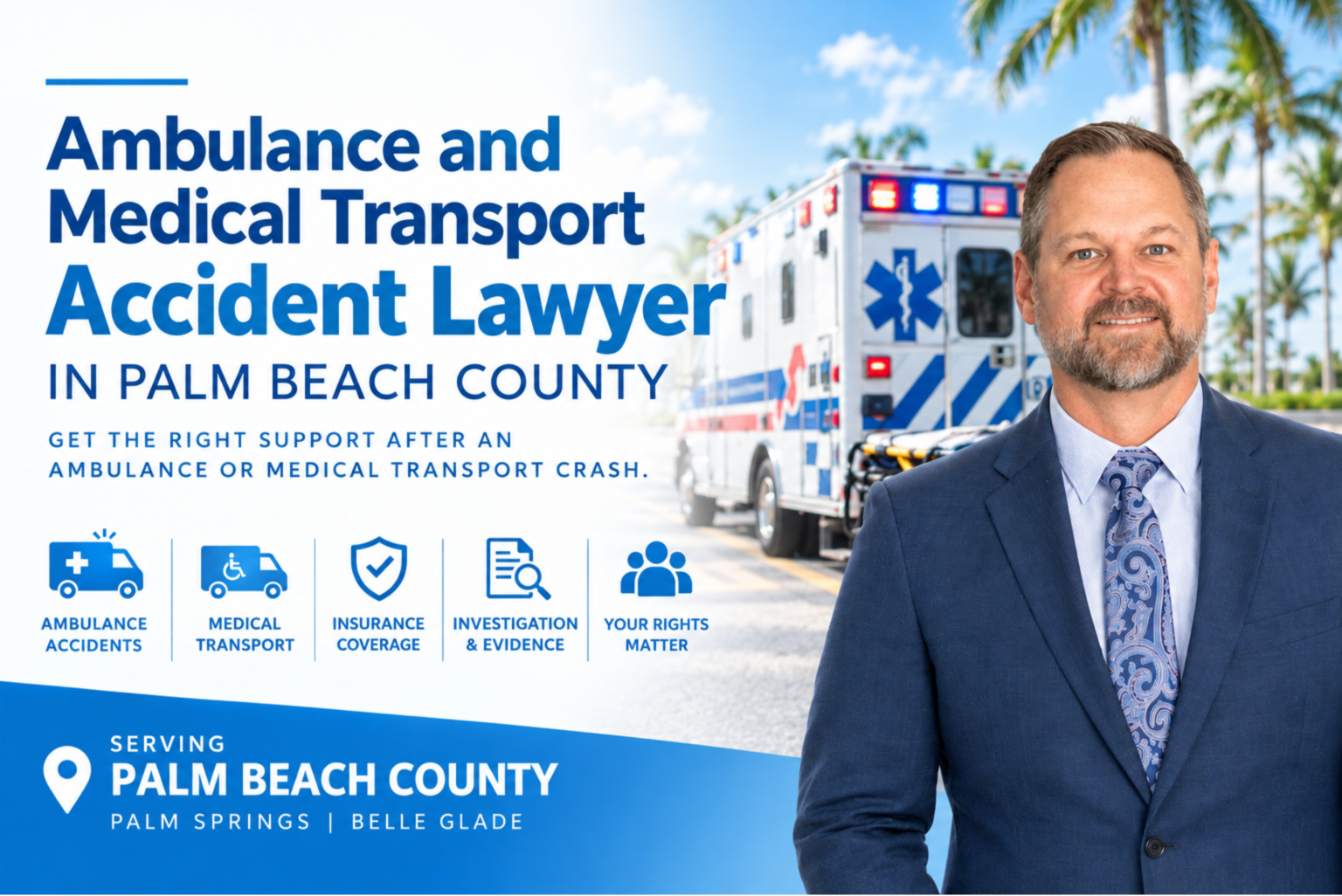
An ambulance or medical transport crash in Palm Beach County is still a motor vehicle claim. Who owned the vehicle, whether the crew was running lights and sirens, and whether the defendant is a private company or a public agency can change coverage, notice rules, and damages.
I am Shannon J. Sagan, Fla. Bar #10793, The Dash Cam Lawyer®. I focus on Palm Beach County injury claims after car, truck, and commercial vehicle crashes, including collisions involving ambulances and medical transport vans. Palm Springs and Belle Glade offices serve Palm Beach County.
Hablamos español.
This page is about the claim after a crash involving a medical transport vehicle. It is not a medical malpractice page under chapter 766. If your hurt came from treatment inside the ambulance, that can raise different issues. If your hurt came from a collision with, or while riding in, that vehicle on the road, this page is the starting map.
Related policy reading only (not a Florida claims substitute): New York requires dash cameras on ambulances.
Important: talk to counsel before you call any insurer
Do not call your own insurer before speaking with an attorney. The duty to cooperate is real, but it does not require you to do it immediately. Never give a recorded statement to any insurer first, including your own. Get legal advice first.
Two common crash pictures, in plain English
You were hit by an ambulance or medical transport vehicle. Another driver, passenger, pedestrian, or cyclist collides with the ambulance or transport van. Fault arguments often turn on speed, lights and sirens, intersection control, lane changes, and whether other drivers yielded. Video and the crash report matter early.
You were a patient or passenger inside the ambulance or transport vehicle. The vehicle wrecks, and you are hurt again in the collision. Liability may still be motor vehicle negligence against the operator, owner, or another driver. That is different from a medical malpractice claim about care decisions. Keep those tracks separate unless the facts truly mix both.
I dig into the scene, the employer or agency, and the insurance that actually responds.
Private ambulance company vs public fire-rescue / EMS
Not every medical transport vehicle is the same defendant.
A private ambulance company or private medical transport operator is often sued like other commercial motor vehicle defendants: driver negligence, employer responsibility for the driver, vehicle ownership, and the company’s liability and excess policies.
Related: commercial vehicle accidents.
A public fire-rescue or EMS agency can bring Fla. Stat. § 768.28 sovereign immunity statute into play. When the defendant is the state, an agency, or a subdivision, Florida’s sovereign immunity waiver can require written claim presentment and can limit recoverable damages. The current statute’s limits language for many covered claims is $200,000 for one person and $300,000 aggregate for the same incident. Missing presentment timing or naming the wrong entity can damage a file before liability is even argued.
I identify who owned the unit, who employed the driver, and whether the claim is private commercial or public entity before anyone races to an insurer statement.
Chapter 401 sets licensing and definitional rules for emergency medical services and ambulance providers. I use those definitions as supporting context for who was on the road and under what authority. They do not replace negligence, coverage, or § 768.28 analysis.
Emergency privileges are not a free pass for negligence
Florida traffic law gives authorized emergency vehicles certain privileges when responding, and other drivers generally must yield. Those rules explain why an ambulance may pass a red light or travel outside ordinary flow when lights and sirens are in use. They do not erase the duty to drive with due regard for safety.
Running hot does not automatically wipe out liability. The claim still asks whether the driver acted with ordinary care under the circumstances and whether another driver’s failure to yield, distraction, or speed contributed. Expect the defense to lean on emergency status. Expect the file to need more than that label.
I do not invent crash statistics. Fault is proven with the scene, witnesses, vehicle data, and video when it exists.
PIP, the 14-day medical clock, and the insurance stack
Florida personal injury protection (PIP) under Fla. Stat. § 627.736 still sits under many Palm Beach County motor vehicle crashes. When a qualifying PIP policy applies, medical benefits generally require initial services and care within 14 days after the motor vehicle accident.
PIP is usually only a first layer. The rest of the stack can include the private company’s liability and excess coverage, a public entity’s coverage path when § 768.28 applies, another motorist’s bodily injury liability, and your own uninsured/underinsured motorist (UM/UIM) coverage when purchased.
Full coverage is marketing language, not a statute. Collision and comprehensive do not create UM. UM is a separate election when purchased.
More: Uninsured motorist accident lawyer in Palm Beach County.
Do not call your own insurer before speaking with an attorney. Never give a recorded statement to any insurer first.
Modified comparative fault
Florida uses modified comparative fault. Under Fla. Stat. § 768.81(6), in covered negligence actions, a party found greater than 50 percent at fault for their own harm may not recover any damages (medical negligence under chapter 766 is treated differently). If you are 50 percent or less at fault, your recovery is reduced by your share of fault.
In ambulance and medical transport crashes, insurers and public defendants push fault hard: you did not yield, you cut in front of lights and sirens, you were speeding, or you were distracted. Video can lock down light cycles, siren use, lane position, and who moved first before those percentages harden.
I do not promise a result. Facts, coverage, notice timing, injuries, and proof decide the file.
Dash cam, ambulance cameras, and nearby video
Preserve video immediately. Lock the original. Make a backup. Do not edit it. Useful sources can include your dash cam, another driver’s dash cam, intersection or business cameras, and onboard ambulance or transport cameras when they exist and can be preserved.
Tell counsel so preservation demands can go out before loops overwrite.
More: How to use dashcam footage in a Florida car accident claim.
Footage helps. It is not required to contact me. I also evaluate crash reports, medical records, damage photos, witnesses, and coverage.
For many Florida negligence actions, Fla. Stat. § 95.11(5)(a) sets a two-year limitations period. Public entity presentment under § 768.28, PIP, and UM claims also have timing rules. Act early.
After an ambulance or medical transport crash: claims-first steps
- Call 911 when there are injuries or a disputed scene. Get a report and note unit numbers you can safely observe.
- Seek medical care. If PIP may apply, Fla. Stat. § 627.736’s 14-day initial treatment rule can control medical PIP access.
- Photograph vehicles, damage, signs, and injuries if you can do it safely.
- Preserve dash cam and phone video. Note nearby and onboard cameras.
- Collect witness names. Do not argue fault at the scene.
- Do not call your own insurer before speaking with an attorney. Never give a recorded statement to any insurer first.
- Contact counsel while coverage, public-entity notice, and video questions are still open.
Related city page: West Palm Beach car accident lawyer.
How I handle a Palm Beach County medical transport crash claim
I focus on medical documentation and PIP sequencing without reckless early statements, private versus public defendant sorting, § 768.28 presentment when a public agency is in play, liability that fits emergency-driving facts, coverage and UM gaps, modified comparative fault, video preservation, and the two-year statute period in § 95.11(5)(a).
Contingency fee: no fee unless I recover for you. That is not a prediction of results.
Palm Springs office: 3003 S. Congress Ave, Suite 2E, Palm Springs, FL 33461. Belle Glade office: 1100 South Main Street, Belle Glade, FL 33430. By appointment.
Frequently asked questions
Is an ambulance crash medical malpractice?
Not automatically. A collision claim is usually motor vehicle negligence. Medical malpractice under chapter 766 is about professional care. Some facts can raise both tracks. This page focuses on the crash claim.
Does lights-and-sirens mean the ambulance cannot be at fault?
No. Emergency privileges and yield rules explain authorized maneuvers. They are not a free pass for negligence. Due regard for safety still matters.
What if the ambulance belongs to a city or fire-rescue agency?
Public entity claims can trigger Fla. Stat. § 768.28 written presentment and damage-limit issues. Identify the agency early and talk with counsel before you assume ordinary private-company claim timing.
How does PIP work after a medical transport crash?
When your facts trigger PIP under Fla. Stat. § 627.736 and your policy, qualifying initial treatment within 14 days is often required for medical PIP benefits. PIP is usually only a first layer.
What is modified comparative fault in these cases?
Under Fla. Stat. § 768.81(6), greater than 50 percent fault for your own harm bars recovery in covered negligence actions. At 50 percent or less, recovery is reduced by your share of fault. Chapter 766 medical negligence is treated differently.
How long do I have to sue for negligence?
For many Florida negligence actions, Fla. Stat. § 95.11(5)(a) provides a two-year period. Public-entity presentment and insurance claim deadlines can be shorter in practice. Act early.
Should I give a recorded statement after an ambulance accident?
Do not call your own insurer before speaking with an attorney. Never give a recorded statement to any insurer first. The duty to cooperate does not require an immediate, uncounseled recording.
Do you speak Spanish, and how do fees work?
Hablamos español. Ask when you call 561-561-DASH (3274). Contingency fee: no fee unless I recover for you. The consultation is free.
Talk with me about an ambulance or medical transport crash in Palm Beach County
If you or a family member was hurt in a crash involving an ambulance or medical transport vehicle in Palm Beach County, call 561-561-DASH (3274) for a free consultation. Contingency fee: no fee unless I recover for you.
The Dash Cam Lawyer®. Shannon J. Sagan, Fla. Bar #10793, owner and attorney. Palm Springs and Belle Glade offices, serving Palm Beach County, including West Palm Beach and surrounding cities.
This page is general information, not legal advice. Reading it does not create an attorney-client relationship.

Looking for an accident Lawyer near you in Palm Beach County? Find Out What Your Case Is Worth - Free Consultation
Call us or complete the form below.
We'll keep your information confidential.
Palm Springs Office
Belle Glade Office
By appointment only